

The project aims to help affected people in the southern and eastern regions of Ukraine. Special attention will be paid to survivors of gender-based violence and female-headed households.
- Period: Febuary 2026 - December 2026
- Donor: Aktion Deutschland Hilft
- Budget: 1.027.589,15 EUR
- Region: Ukraine
- Target group: War-affected population
Project objective:
To reduce the vulnerability of households affected by conflict and forced to relocate within Ukraine by improving the psychosocial well-being of children, expanding access to inclusive services for persons with disabilities, and strengthening the economic resilience of vulnerable families in the context of a protracted humanitarian crisis.
Activities
Psychosocial support for children in Kharkiv through sport
In Kharkiv, particularly in the Northern Saltivsky district, children live in conditions of constant danger, limited access to offline education, and safe spaces for socializing. According to the HNRP, children in frontline areas are at increased risk of chronic stress, anxiety, and social isolation.
To address these needs, Help – Hilfe zur Selbsthilfe implements psychosocial support measures based on soccer training. The sessions combine physical activity with the development of emotional regulation, teamwork, and social skills in a safe environment.
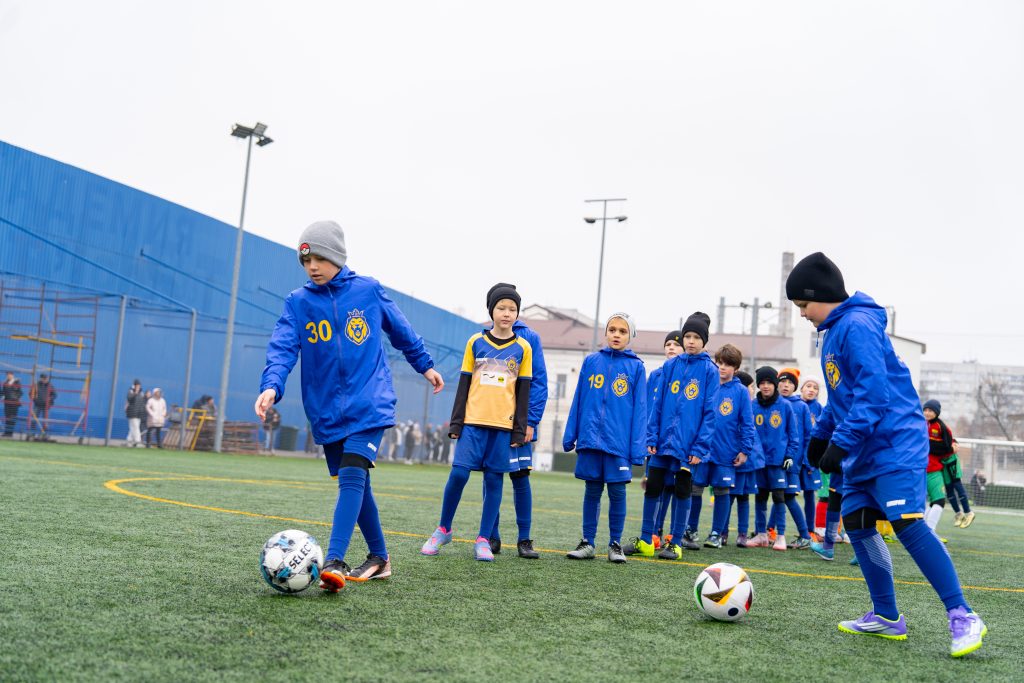
Up to 50 children participate in the program, divided into three stable groups. Each group trains three times a week under the guidance of a professional coach. For many children, these sessions are the only safe space for socialization. The activities help reduce psychosocial stress, and regular observation and communication with parents allow for timely responses to children’s needs.
Key indicators:
• 50 children participating in PSS activities
• 39 training sessions per month
• 80% of children show improvement in psychosocial well-being
Psychosocial support and first psychological aid for displaced children in Uzhhorod
Uzhhorod is an important reception center for displaced families, including children who have experienced the trauma of war, loss of social ties, and prolonged uncertainty. According to the HNRP, prolonged displacement significantly increases the risk of psychosocial stress among children.
In response to these needs, Help – Hilfe zur Selbsthilfe runs a psychosocial support center in Uzhhorod, which provides comprehensive MHPSS services to children affected by war. Under the guidance of a qualified psychologist, individual and group sessions are conducted using child-centered methods, including art and play therapy, psychoeducation, creative and relaxation activities.
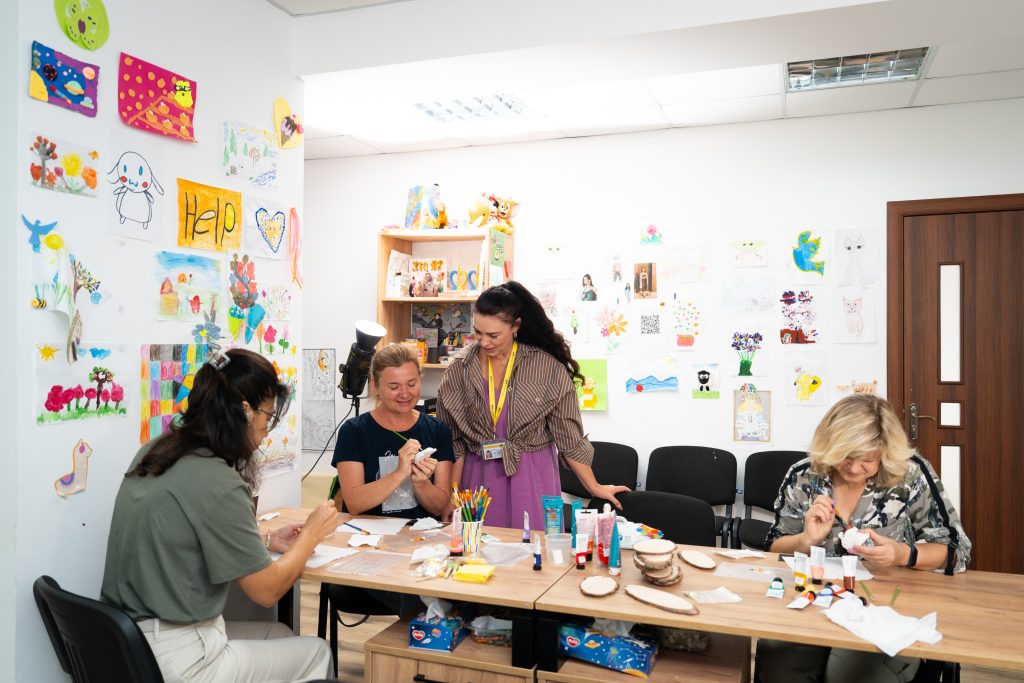
The consultations are aimed at emotional stabilization, the development of stress management skills, and socialization. Some of the activities are conducted outside the center and include cultural and educational activities that promote interaction with the host community.
Special attention is paid to children with disabilities, children from collective centers, and other vulnerable groups. Referral mechanisms to specialized services are in place, and parents and guardians receive counseling and psycho-educational support, including separate groups for parents of children with disabilities.
Regular outreach sessions are also conducted in collective accommodation facilities and partner institutions, allowing children with limited access to inpatient services to be reached and cases requiring additional assistance to be identified in a timely manner.
Key indicators:
• 616 individual consultations
• 363 group sessions
• 70% of children show improvement in emotional regulation and social interaction
• 200 children from particularly vulnerable categories have gained access to MHPSS services
Training in inclusive communication with persons with disabilities (RCC)
In the Kharkiv and Zaporizhzhia regions, the war has led to a shortage of specialists capable of working effectively with persons with disabilities, particularly those who are wounded or have sensory or mobility impairments.
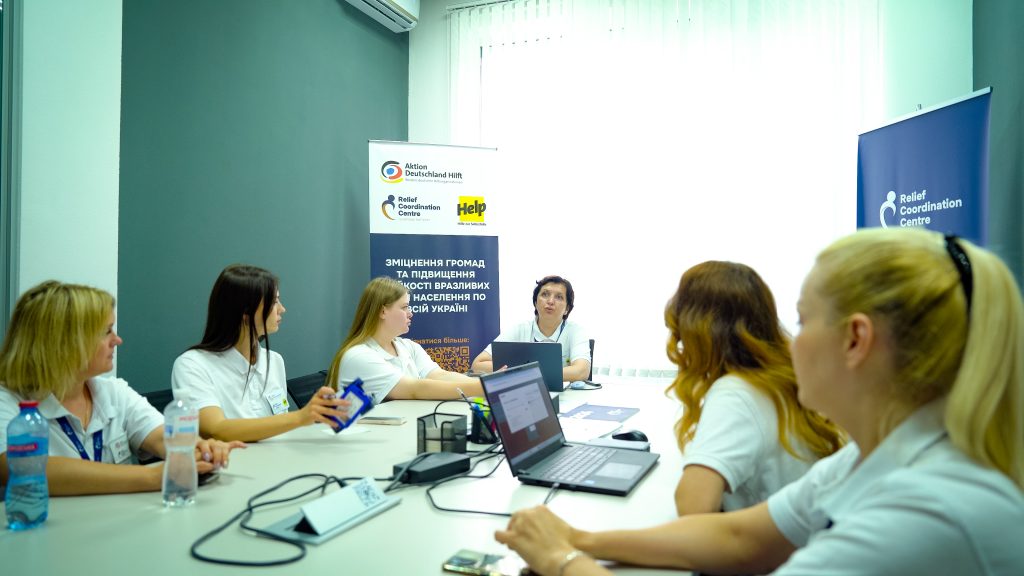
In partnership with RCC, a training program on inclusive communication and accessibility is being implemented. Fifty-five training sessions are planned for 825 specialists from the social protection, health care, education, administrative services, transport, and civil society sectors. Training is conducted in person or online, depending on security conditions.
The activity aims to improve professional competence and enhance the quality, dignity, and accessibility of services for persons with disabilities.
Key indicators:
• 55 training sessions
• 825 participants
• 80% of participants improved their knowledge according to assessment results
Home help and case management for people with limited mobility (RCC)
In the Kharkiv and Zaporizhzhia regions, people with disabilities and limited mobility face isolation and limited access to basic services.
The RCC provides home help and individual case management. Seven specialized workers make 8,720 home visits, providing regular support to 50 particularly vulnerable individuals. In addition, three case managers accompany 450 complex cases, assisting with access to social, medical, legal, and humanitarian services.
Activities are aimed at reducing isolation, restoring access to rights, and improving quality of life.
Key indicators:
• 8,720 home visits
• 50 people receiving regular assistance
• 450 cases accompanied
• 80% of beneficiaries report improved access to services
Grant support for microbusinesses for vulnerable households
Loss of income has significantly weakened the resilience of households in Ukraine, especially among IDPs and war-affected populations. According to the HNRP, economic vulnerability is a key factor in negative coping strategies, highlighting the need to restore access to livelihoods.
The measure provides conditional grants of up to €3,000 to support, restore, or develop microbusinesses for at least 71 vulnerable households in all non-occupied regions of Ukraine. Grants are provided in accordance with the recommendations of the Food Security and Livelihoods Cluster and are mainly directed towards the purchase of equipment, tools and, in part, raw materials, as well as marketing support.
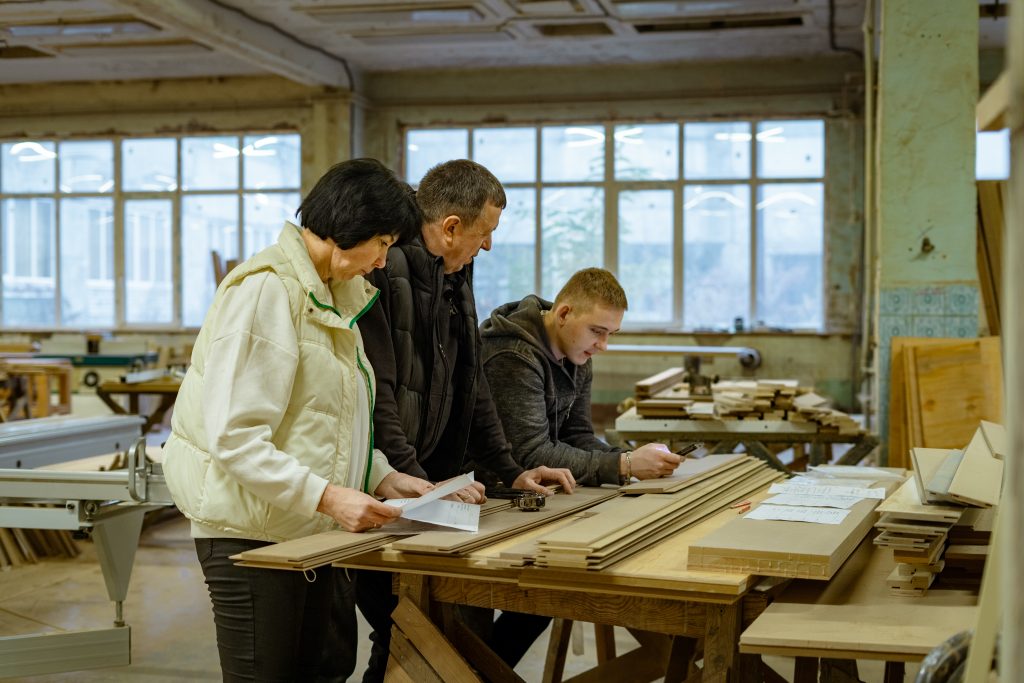
Priority is given to IDPs, women entrepreneurs, households with children or persons with disabilities, veterans, and businesses affected by the war. Selection is conducted transparently based on an assessment of vulnerability and business idea viability, followed by monitoring and light mentoring.
Key indicators:
• 71 microbusinesses received grants
• 30% of beneficiaries are from priority vulnerable groups
• 70% of beneficiaries report stabilization or growth in income
Flexible emergency aid – Bonn hilft Cherson
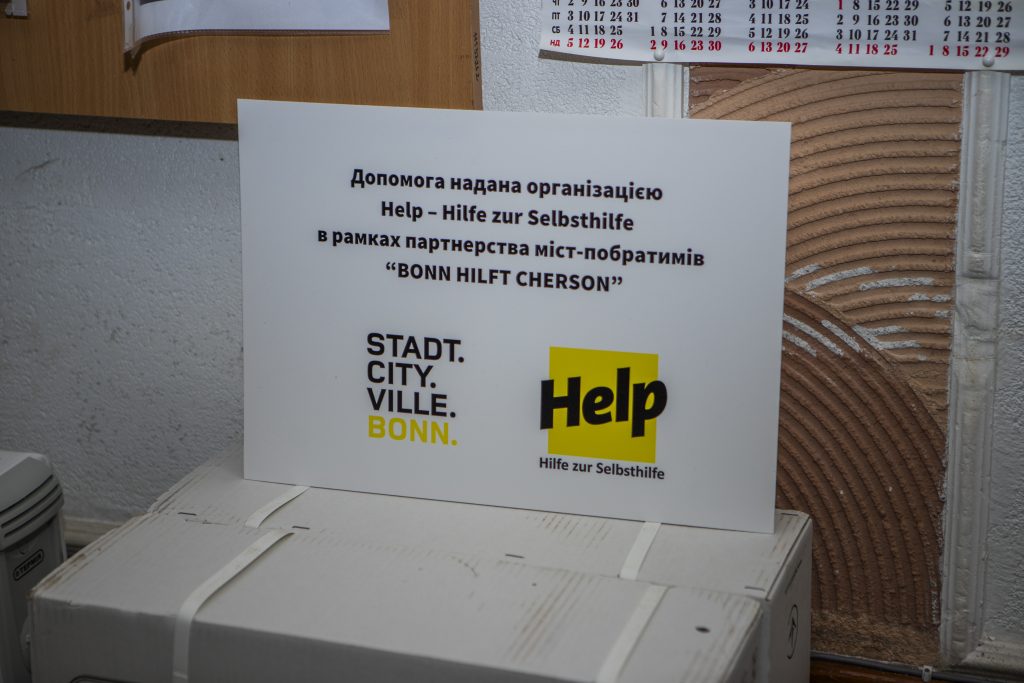
In Kherson, the humanitarian situation remains unstable due to constant shelling and destruction of infrastructure, requiring a rapid and adaptive response. Through the Bonn hilft Cherson mechanism, Help – Hilfe zur Selbsthilfe implements flexible emergency assistance aimed at supporting community centers, social services, and providers of critical utilities.
Assistance is provided based on needs identified in real time in coordination with local authorities, with priority given to the protection, safety, winter preparedness, and dignity of the affected population. The flexible approach allows for the effective use of resources, avoids duplication, and strengthens local capacities.